DeepSeek, the Chinese AI startup behind the widely used DeepSeek-R1 and DeepSeek-V3 models, has raised more than 50 billion yuan (about $7.4 billion) in its first external funding round. The deal values the company at over $50 billion, making DeepSeek the most valuable AI startup in China.
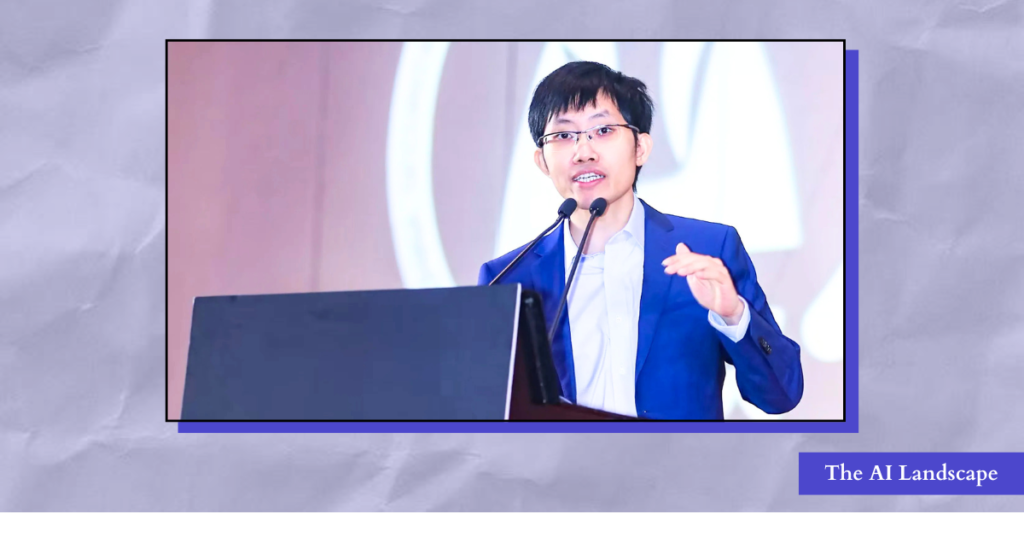
Founded in 2023 by Liang Wenfeng, DeepSeek had previously relied on funding from its founder and affiliated hedge fund High-Flyer. The new round marks the company’s first investment from outside backers and comes after a rapid rise in global recognition driven by its open-source AI models, which have challenged leading offerings from OpenAI, Anthropic, and Google.
Why This Funding Round Is Different?
Most AI startups raise external capital by selling equity, which often results in significant founder dilution and reduced control over time. DeepSeek took a different route. Instead of allowing investors to buy shares directly, the company structured the round through a limited partnership controlled by founder Liang Wenfeng.
Under the arrangement, investors are reportedly locked in for five years while Liang retains effective control of the company despite raising more than $7.4 billion. The structure echoes founder-led governance models used by Mark Zuckerberg at Meta, Larry Page and Sergey Brin at Google, and Sam Altman at OpenAI.
DeepSeek’s approach goes even further by limiting investor influence while securing one of the largest AI funding rounds in recent years.
The One Investor That Got Special Treatment
While most investors in the round accepted a limited partnership structure with no direct ownership and a five-year lockup period, one participant received special treatment. China’s National Artificial Intelligence Industry Investment Fund was granted direct investment access, voting rights, and was exempt from the lockup restrictions.
The arrangement highlights DeepSeek’s growing strategic importance within China’s AI ecosystem. Beijing appears to view the company as a national AI champion capable of strengthening the country’s position in advanced AI development amid ongoing U.S. chip restrictions.
More than a funding detail, this may be the clearest sign yet that DeepSeek has evolved from a high-growth startup into a strategic national asset.
Why Investors Are Betting on DeepSeek?
Investors are betting on DeepSeek because it has achieved something few AI companies have managed: building frontier-scale models with relatively limited external capital.
The company gained global attention with DeepSeek-V3, a Mixture-of-Experts model featuring 671 billion total parameters and 37 billion active parameters per token, followed by DeepSeek-R1, a reasoning model that demonstrated performance comparable to leading systems from OpenAI on several math, coding, and reasoning benchmarks.
Beyond model performance, DeepSeek has become a symbol of AI efficiency. The company claimed DeepSeek-V3 was trained for under $6 million in compute costs, significantly lower than estimates commonly associated with frontier model development.
Since launching in 2023, DeepSeek has gone from a largely unknown startup to a company valued at more than $50 billion, with its open-source models attracting millions of developers, researchers, and enterprises worldwide. For investors, the opportunity is not just another AI lab, but a company that has proven it can compete with global leaders while operating with a fundamentally different cost structure.
DeepSeek vs Other Leading AI Companies
DeepSeek’s latest funding round has pushed it into the same conversation as OpenAI, Anthropic, and other leading AI companies. While it still trails some rivals in valuation and funding, it has reached the top tier of AI startups in a remarkably short period and with significantly less external capital.
| Company | Country | Founded | Latest Valuation | Total Funding Raised | Key Models | Open Source? | Notable Strength |
|---|---|---|---|---|---|---|---|
| DeepSeek | China | 2023 | $50B+ | $7.4B+ | DeepSeek-V3, DeepSeek-R1 | Yes | Cost-efficient frontier AI models |
| OpenAI | United States | 2015 | $300B+ | $60B+ | GPT-4o, o-series | No | Largest AI ecosystem and distribution |
| Anthropic | United States | 2021 | $100B+ | $18B+ | Claude Opus, Claude Sonnet | No | Enterprise AI and AI safety leadership |
| xAI | United States | 2023 | $80B+ | $17B+ | Grok 4 | Partially | Integration with X platform and real-time data |
| Mistral AI | France | 2023 | ~$6B | ~$1.2B | Mistral Large, Mixtral | Mostly | Europe’s leading open-source AI company |
| Cohere | Canada | 2019 | ~$5.5B | ~$1B | Command R | No | Enterprise and retrieval-focused AI |
| Sarvam AI | India | 2023 | ~$1B+ | ~$330M | Sarvam-M, Indic AI Models | Partially | India’s leading multilingual AI startup |
| Moonshot AI | China | 2023 | ~$3B+ | ~$1.3B | Kimi | No | Long-context AI assistants |
| Zhipu AI | China | 2019 | ~$3B+ | ~$1.4B | GLM Series | Partially | Enterprise AI and government adoption |
Verified Investment Data
| Investor | Reported Contribution |
|---|---|
| Liang Wenfeng | 20B yuan |
| Tencent | 10B yuan |
| CATL | 5B yuan |
| JD.com | Participated |
| NetEase | Participated |
| IDG Capital | Participated |
| Monolith Management | Participated |
| National AI Fund | Participated directly |