Marlowe has raised $277 million in seed funding at a $1.15 billion valuation to build data centers designed for running AI models rather than training them. The six-month-old startup announced the round on 23 November, with Accel leading the investment.
The company designs, builds and operates computing systems for AI inference, the work of running trained models inside everyday products. It starts with chips from AMD and Etched instead of the Nvidia GPUs that power most AI data centers, tuning the chips, networking and software together for each workload.
Why Marlowe is betting against the default chip
Marlowe says the shift from training models to running them has exposed a gap in how data centers are built. Most facilities were designed for training, so inference workloads run on hardware that was never tuned for them, and the company says that waste is now expensive.
The startup says data center construction costs have risen 40 percent since 2020, while power shortages, permits and financing have slowed new builds. It argues that squeezing more work from each watt matters more than adding raw capacity.
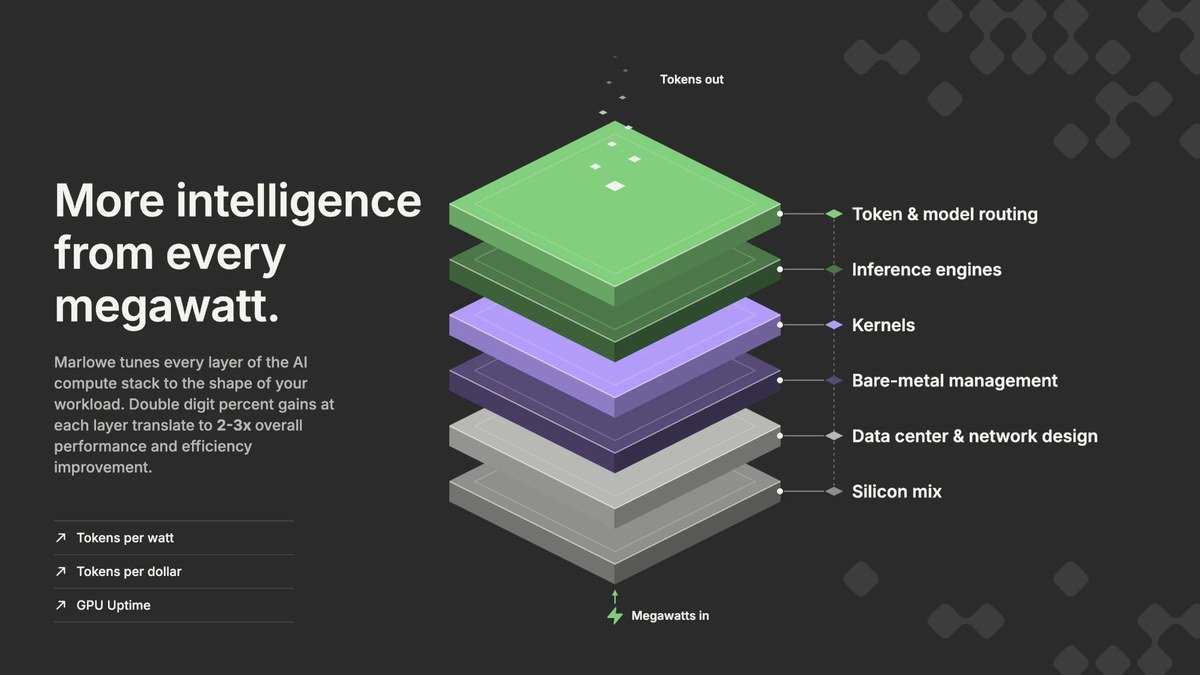
Marlowe claims gains of 10 to 20 percent at each layer, from chips and networking to power management and software, add up to two to three times more output per watt and per dollar than conventional GPU clouds. It counts output in tokens.
On its website, the company says it optimizes the full stack for each workload so new silicon delivers on its promise.
What the money will build
Most of the funding will go toward chips, networking equipment and the support needed to run the sites, along with hiring. The company is approaching 30 employees and is based in Bellevue, Washington, and Redwood City, California.
Its first site, built around chips from Etched, is scheduled to go live in December 2026 and will mainly serve a large AI coding company. A second, larger site using AMD Helios systems is planned for the second quarter of 2027.
Both sites are under contract and a third is under a letter of intent. Marlowe says it has signed three customer agreements, but it has not named the customers or the locations.
Who is behind the company
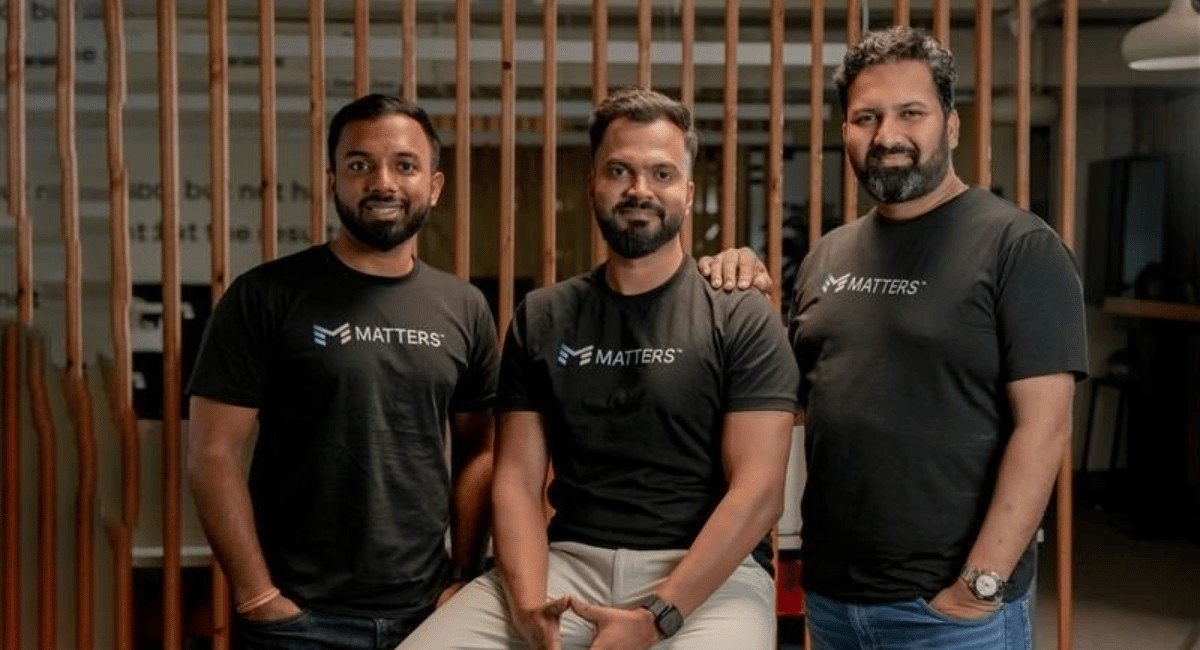
Marlowe was founded in May 2026 by Dan Lewis and Kutta Srinivasan. Lewis previously co-founded the trucking startup Convoy and later led enterprise AI work at Microsoft. Srinivasan was a corporate vice president at Microsoft and the company-wide technical lead for AI infrastructure.
Lior Susan, founder and chief executive of Eclipse, is Marlowe’s executive chairman. Eclipse led a smaller initial round that is included in the $277 million total. Ido Susan, founder and chief executive of data center networking company DriveNets, sits on the board.
Other backers include Bessemer, Altimeter, Atreides, Journey and Valor. Angel investors include KKR co-founder Henry Kravis, Uber chief executive Dara Khosrowshahi, Box chief executive Aaron Levie, former LinkedIn chief executive Ryan Roslansky and former Expedia chief executive Mark Okerstrom.
What the founders said
“You can’t just take a new chip that comes out and plug it in and expect it to produce tokens. You have to go do the work.”
Dan Lewis, co-founder and chief executive, Marlowe
Lewis said demand for AI is high and it should be accessible and affordable for everyone. Srinivasan said that at the large tech companies where he worked, non-Nvidia chips often sat idle or went underused because engineering effort went to Nvidia hardware first.
What to watch next
The December launch of the first site is the first real test. It will show whether Marlowe can turn its tuning work into production performance for a paying customer, and whether more customers follow before the larger AMD site opens in 2027.
Marlowe is not alone in the bet. Gimlet Labs raised $300 million at a $3 billion valuation in September and General Compute raised $100 million in October, and both are building inference clouds that mix chip types. See the latest AI rounds on our funding tracker.