Noeri has launched with $110 million in funding to build AI systems that keep improving from a company’s own data and work.
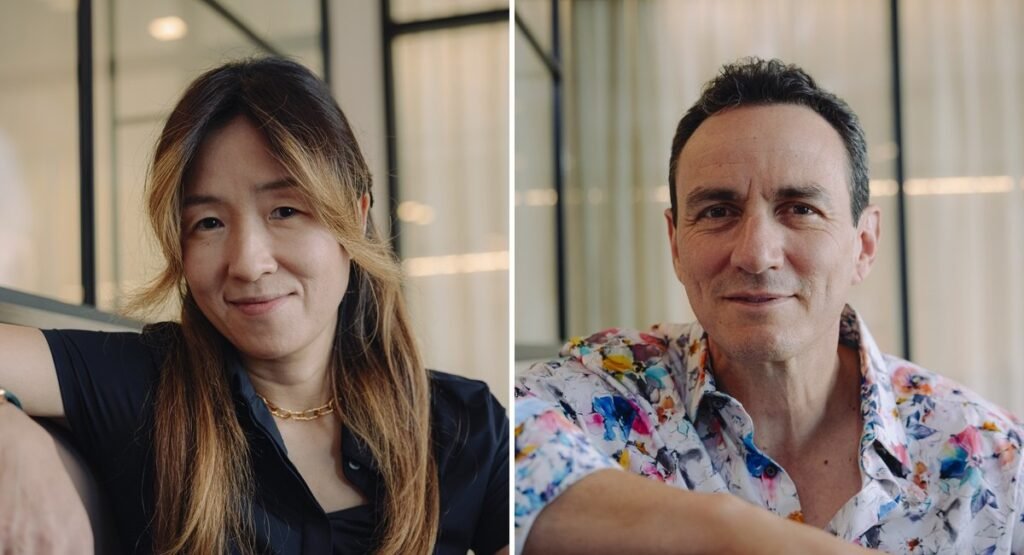
The Palo Alto lab was founded in 2026 by Stanford computer science professors Yejin Choi and Carlos Guestrin, who serve as co-chief executives. Menlo Ventures led the round.
What Noeri builds
Today’s AI models are frozen once training ends. Whatever a model knew on its last day of training is what it knows for the rest of its deployment. Noeri builds AI as a living system instead, one that self-organizes and self-improves through its interactions and experiences on the job.
The system studies an enterprise’s data and workflows, then improves the whole system around a task. It can change the instructions, the tools, which model handles each step and, where it pays off, the models themselves. Every change is explained and sent to a person for approval, much like a code review.
The software works with closed and open-weight models alike and adapts as new models arrive. Customers keep ownership of their data and of the workflows and models they develop with the system.
“The future of AI will be a healthy ecosystem of many intelligences, in all sizes, strengths and quirks, each shaped by the people and organizations that use it.”
Yejin Choi, Co-founder and Co-CEO of Noeri
The $110 million round
Madrona Venture Group, Kindred Ventures, Wing Venture Capital and NEA also took part in the round. Cisco Investments, NVIDIA and Snowflake joined as strategic investors. The company did not disclose a valuation.
Noeri is working with strategic partners across industries, including some of its investors, so its technology learns to generalize before it specializes for individual customers. It is hiring researchers and engineers in Palo Alto and Zurich.
“Most new AI labs ask the market to wait years for a breakthrough. Carlos and Yejin are doing world-class research and putting it to work inside companies at the same time. That combination is rare, and it is why we moved quickly to lead this round.”
Venky Ganesan, Partner at Menlo Ventures
Two researchers with a track record
Choi is a MacArthur Fellow and a two-time TIME100 AI honoree. Her research focuses on making smaller AI models more capable. She previously led research at the Allen Institute for AI and worked as a distinguished scientist at Nvidia before joining Stanford’s faculty in early 2025.
Guestrin co-created XGBoost, one of the most widely used machine learning tools, and co-founded Turi, which Apple acquired in 2016. He went on to lead Apple’s central machine learning and AI organization and now directs the Stanford AI Lab. Noeri is his seventh startup.
“We think specialization can move the whole curve. Noeri builds AI that gets obsessed with a company’s hardest problems and teaches itself to solve them, and the company owns what it builds.”
Carlos Guestrin, Co-founder and Co-CEO of Noeri
Why companies would want it
Large companies spend heavily on AI but often struggle to turn it into results. For a specific job, a company usually chooses between paying more for the most capable model or accepting weaker results from a cheaper one. Noeri aims to move past that trade-off.
The idea grew from work with a Stanford microbiology and immunology team. A small model built to use older OpenAI models more cheaply outperformed GPT-5 on that team’s research needs, surprising even its builders.
The name Noeri means intelligence, in the plural. It reflects the founders’ bet that AI should be many systems shaped by the people who use them, not a single system owned by a few.
You can follow more AI funding rounds on our funding tracker.