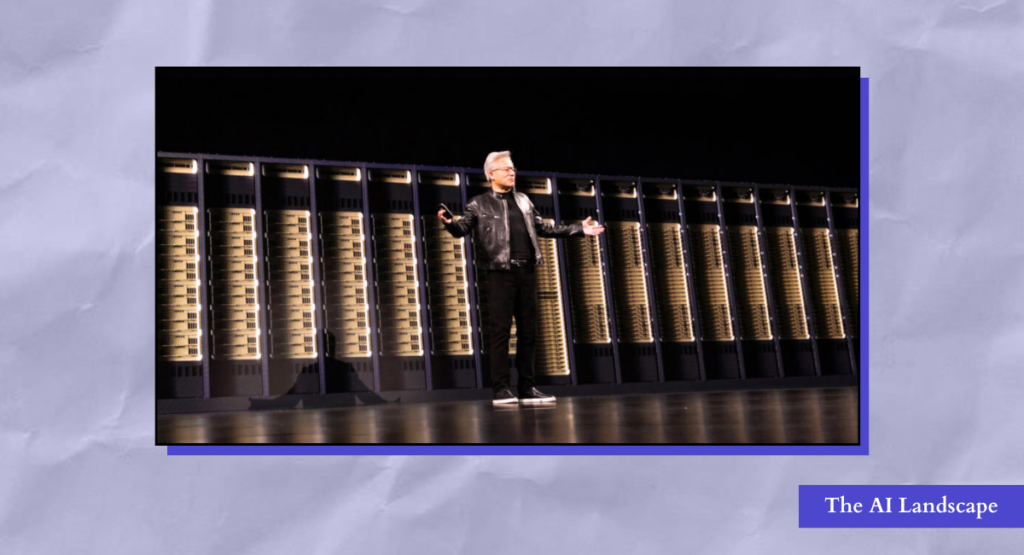
NVIDIA, the world’s largest AI chipmaker, says its latest Rubin-generation AI infrastructure can run on 45°C (113°F) liquid cooling, which is hotter than a typical hot tub, while remaining more efficient than conventional cooling methods.
In a recent blog post, the company described the design as a major step toward reducing both energy consumption and water usage in AI data centers. As AI workloads continue to grow and data centers require more power than ever before, cooling has become one of the industry’s biggest challenges. NVIDIA believes its new liquid cooling architecture can help operators run more AI hardware while using fewer resources.
The announcement highlights a broader shift in the AI industry, where innovation is no longer focused only on faster chips. Companies are now rethinking the infrastructure that powers AI, from energy systems to cooling technologies, to support the next generation of AI factories.
Why This Matters Now
AI data centers are getting hotter as power density continues to rise. Modern AI servers pack far more GPUs into each rack than traditional data centers, creating massive amounts of heat that conventional air-cooling systems struggle to handle.
According to Reuters, managing heat has become one of the biggest challenges for data center operators, which is why liquid cooling is rapidly gaining adoption across the industry. Liquid can remove heat much more efficiently than air, making it better suited for large-scale AI workloads.
The challenge has become so significant that companies and governments are rethinking how data centers are built. China, for example, has started deploying underwater data centers that use naturally cool seawater to remove heat from servers.
In 2025, the country completed the world’s first commercial underwater intelligent computing cluster in Hainan, and more recently launched an offshore wind-powered underwater data center near Shanghai. These facilities use the surrounding ocean as a natural cooling system to reduce energy consumption and improve efficiency.
The bigger trend is clear that cooling is becoming just as important as compute power. NVIDIA’s new 45°C liquid cooling architecture is its answer to this challenge, aiming to help operators run more AI hardware while using less energy and water.
What NVIDIA Actually Unveiled and How the 45°C Cooling System Works
NVIDIA’s announcement is not about a single product. It is about a Rubin-generation AI factory reference design that serves as a blueprint for future AI data centers. The design uses 100% liquid cooling, with every chip and networking component cooled through a closed-loop system. NVIDIA says its DSX reference architecture provides the framework for building and operating this infrastructure at scale.
The cooling process is relatively simple. Heat is captured directly from the chips, transferred through liquid loops, and then released through outdoor dry coolers. In suitable climates, this can reduce or even eliminate the need for energy-intensive mechanical chillers.
The system uses a water and propylene glycol coolant mix and is designed to operate with warm-water direct liquid cooling at 45°C. The goal is not to make servers colder, but to remove heat more efficiently while using less energy and water.
The Efficiency Gains NVIDIA Is Promising
According to NVIDIA, the biggest advantage of its 45°C liquid cooling design is improved efficiency. The company says the approach can reduce cooling water consumption from around 2.6 million gallons per megawatt per year to near zero in favorable climates.
NVIDIA also claims the design can support up to 30% more GPUs within the same power budget, allowing operators to deploy more AI compute without increasing energy capacity. In addition, the company says the architecture can improve Power Usage Effectiveness (PUE), meaning a larger share of electricity goes toward running AI workloads instead of cooling infrastructure.
If these numbers hold up in large-scale deployments, they could significantly lower the cost and resource requirements of future AI data centers.