OpenAI has launched Dots, a new breed of always-on AI agents that keep working long after you close the chat window. CEO Sam Altman unveiled the product on Tuesday at the company’s DevDay 2026 event in San Francisco, describing them on stage as remarkably capable, always-on agents built to handle really anything you can think of.
Each dot runs on OpenAI’s flagship GPT-6 Astra model and gets its own cloud computer and browser. The idea is a sharp break from the chatbot loop.
You hand a dot a goal, give it a name, and it pursues that goal around the clock, learning your preferences and working habits as it goes. “Today, you can start with your primary dot, give it a name, and make it your own,” OpenAI said in its launch announcement. “Over time, we envision teams of dots working together on your behalf.”
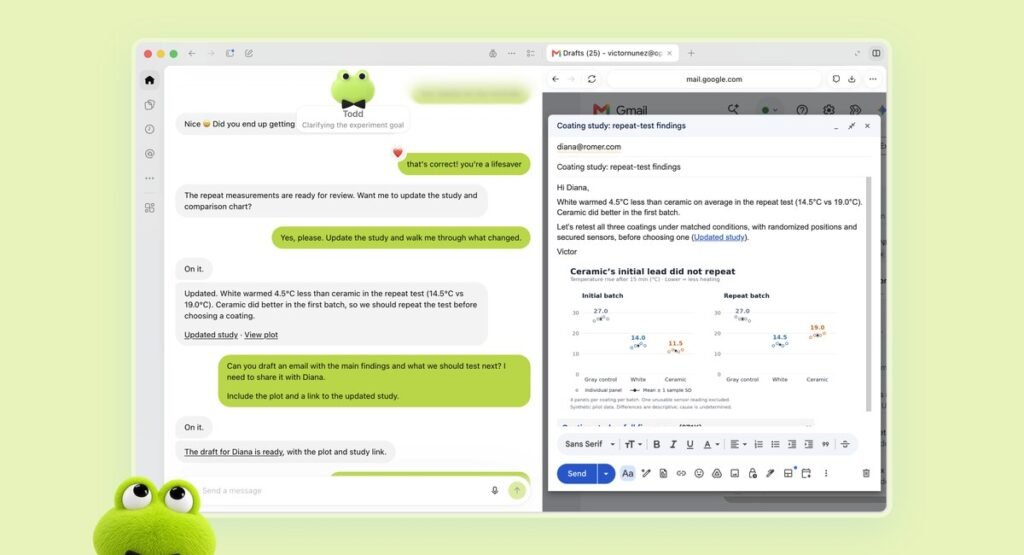
In practice, a dot can monitor customer feedback and ship bug fixes, rerun a scientist’s analysis as new data arrives, or quietly prepare an invoice it noticed you forgot to send. It connects to more than 4,000 applications through OpenAI’s plugin ecosystem and can reach you wherever you already work, through ChatGPT, Slack, Microsoft Teams, voice calls, and soon text messages.
When you are not actively working with it, the dot switches to what OpenAI calls proactive research, scanning connected apps in read-only mode for ways to help.
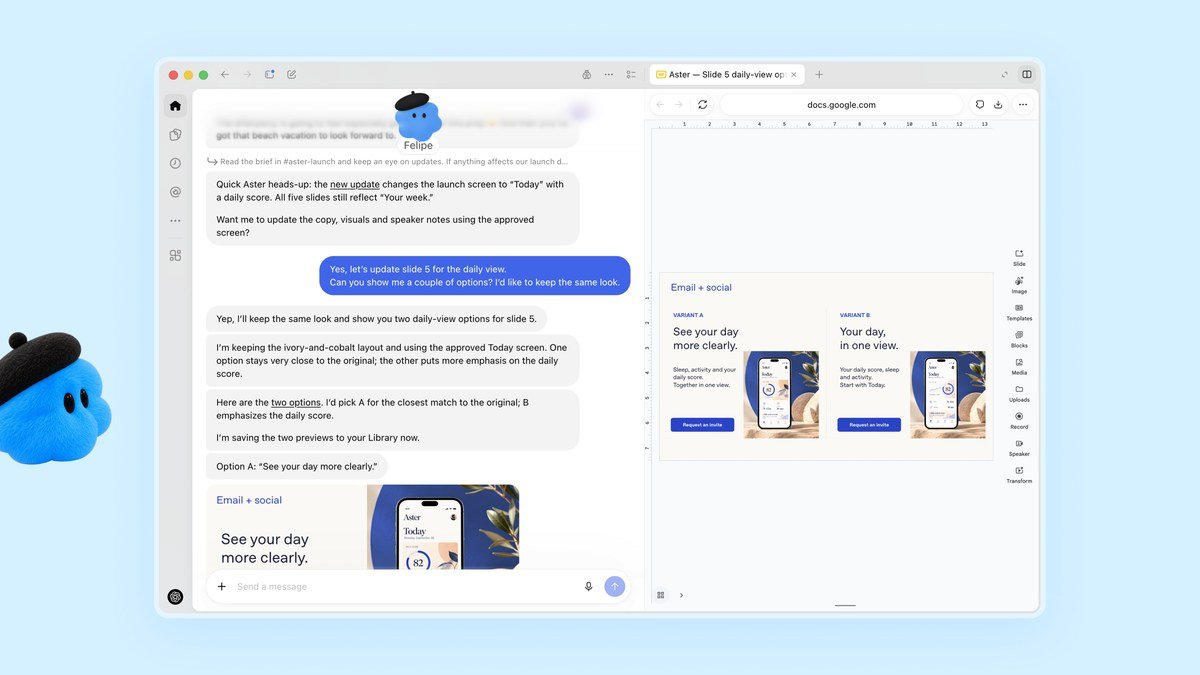
An agent with a face
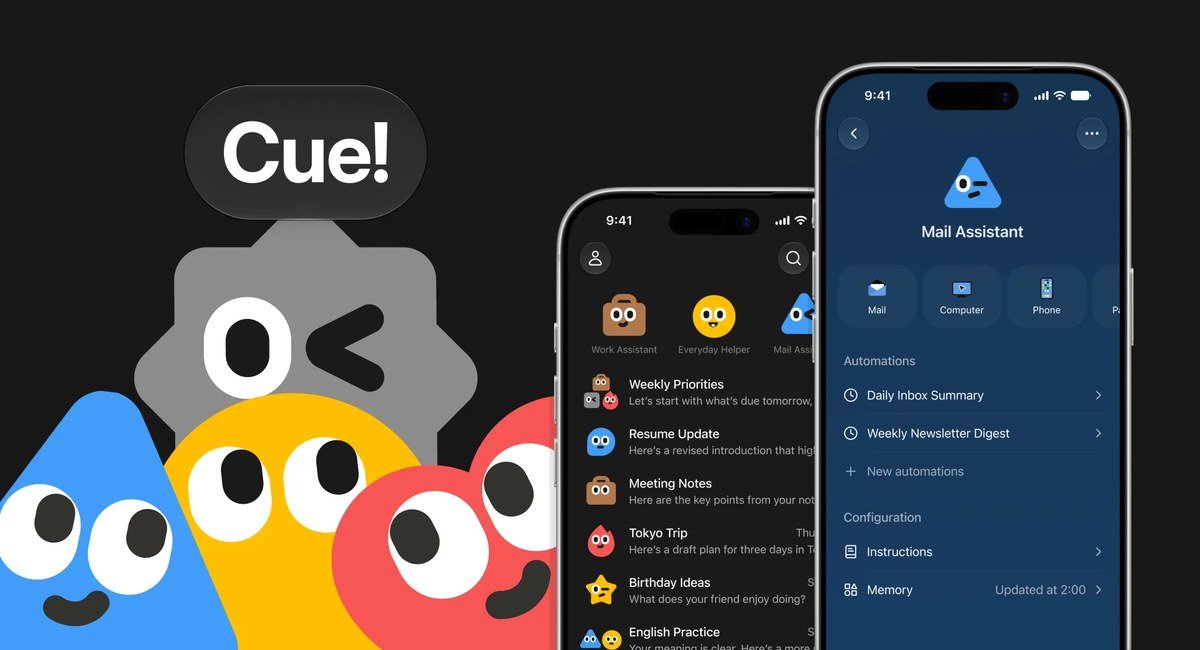
The most striking thing about Dots is not the capability but the packaging. Each dot is a small, bubbly animated character that lives in the ChatGPT interface. You pick its shape and name, from a yellow triangle called Alfred to a pink heart called Jojo.
“By giving Dots their own identities, they become an extension of our team,” said Holly Li, a member of OpenAI’s product team. The resemblance to Meta’s recently launched Muse agent is hard to miss, and the two are now the defining matchup of the agent wars.
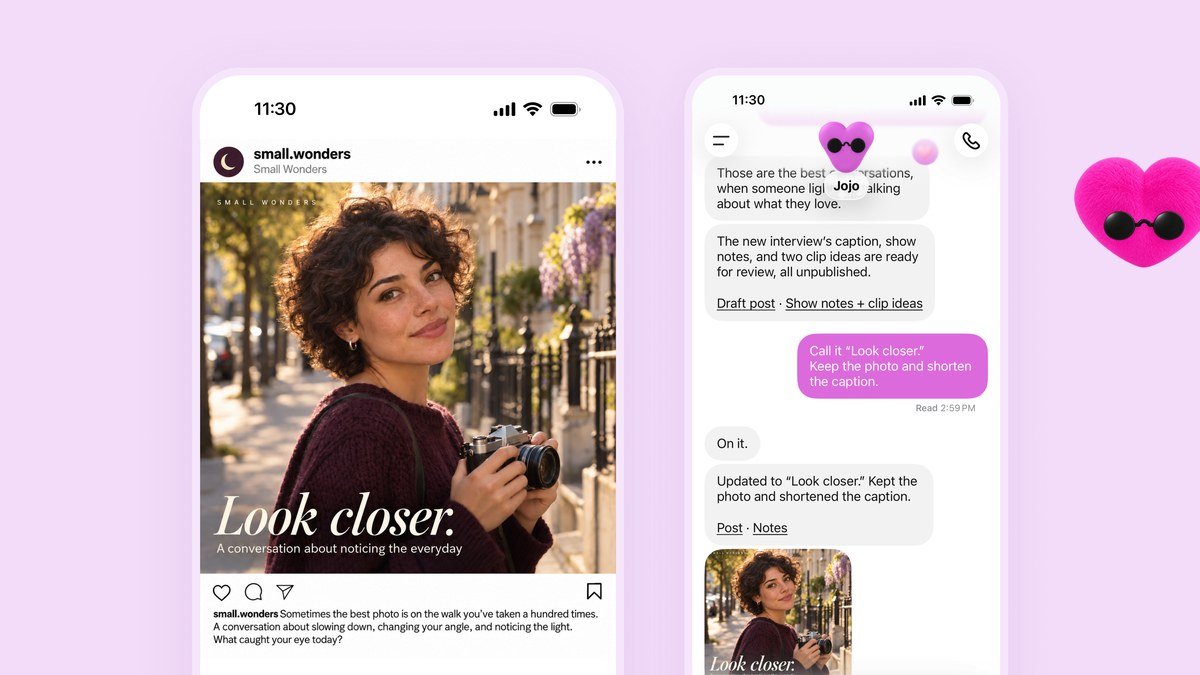
Built for the enterprise
OpenAI is also pitching specialist dots for organizations. These are individual agents provisioned with their own identities, credentials, and tools to take on defined responsibilities like procurement, invoice processing, and customer support. The company says it is working with Microsoft to integrate specialist dots with enterprise governance and security controls in Agent 365.
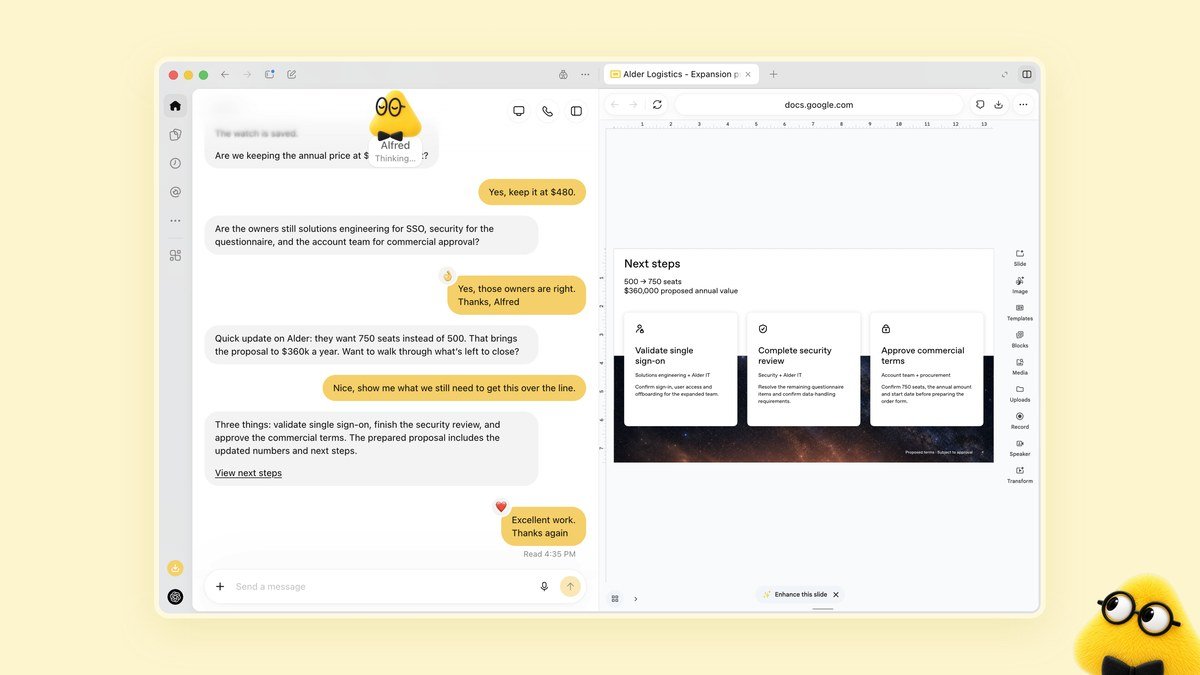
Dots are rolling out now to ChatGPT Pro and Business Premium users in eligible markets, with Enterprise workspaces able to enable a beta. The first dot is included at no extra cost, and conversations with it do not count against normal ChatGPT usage limits.
Safety, with the brakes on
Always-on agents that act on your behalf raise obvious safety questions, and OpenAI is answering them loudly. Dots run on an isolated cloud computer, use auto-review to check consequential actions against your instructions, and require approval for anything sensitive.
Changing a password, for example, always stays with the user. If OpenAI’s monitoring detects a safety concern, it can pause or stop the dot’s work entirely.
The agent wars heat up
The launch lands in the middle of an escalating race to own autonomous AI. Meta’s Muse assistant drew millions of downloads earlier this month, and analysts see the two products fighting on different turf.
“We think that accessibility and massive distribution will continue to give Meta an early advantage in consumer adoption, while OpenAI’s existing relationships with businesses and professional users could help Dots gain traction in more complex and economically valuable work,” Evercore ISI analyst Mark Mahaney wrote on Tuesday.
OpenAI paired the launch with ChatGPT Space, a shared workspace where employees and agents collaborate on the same documents and projects.
What the internet thinks
Reaction online has been split between excitement and eye-rolls. On OpenAI’s official launch reel, which pulled 24,000 likes, one commenter wrote “Cannot wait to meet my dot” while another countered “Cool feature, terrible for employment.” The comparison game dominated the replies, with “Loving this AI war” and “Kind of reminds me of her, the movie” among the most echoed sentiments.
Creators were equally divided. Roberto Nickson’s breakdown drew cheers like “I’m soooo ready” alongside accusations that OpenAI was mimicking Meta’s Muse and xAI’s Grok. The Rundown AI’s recap attracted “Grok bots copycat?” and “Is this open ai’s ‘muse’?”, while others declared plain AI fatigue.
Watch the keynote
Sam Altman, Romain Huet, Tejal Patwardhan, and Holly Li announced and demoed more than 20 launches at DevDay 2026, with Dots as the headline act. Watch the full keynote below.