Physicl, a Paris startup building training data for physical AI, has raised $10 million in seed funding. The round was led by Inovia Capital, with US Venture Partners taking part. The company announced the funding alongside Studio, its first product for generating realistic 3D training scenes.
What Studio does
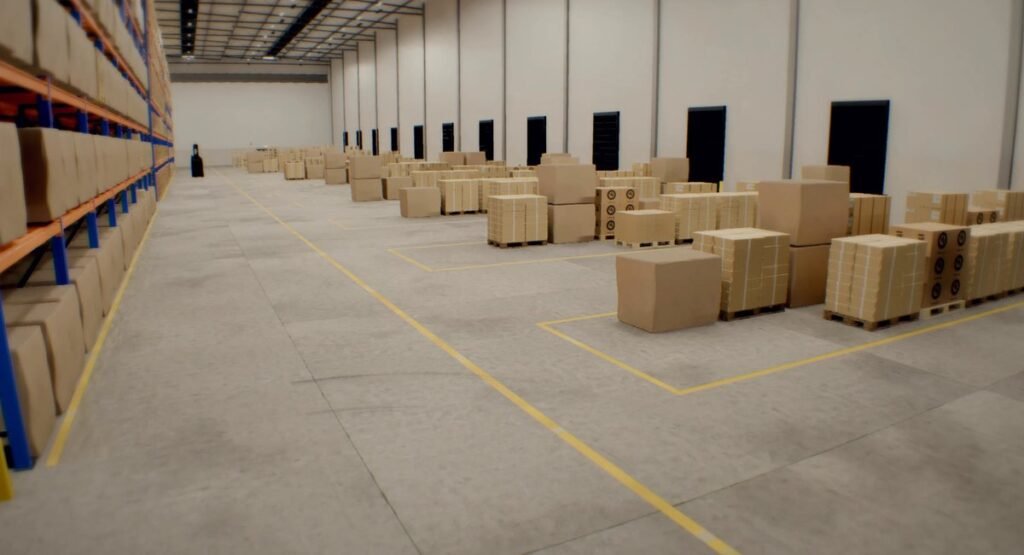
Studio gives researchers access to 10,000 ground truth 3D environments and more than 100,000 assets. Users can pick an environment or describe a scene where their model struggles, then adjust lighting, camera viewpoint and object placement to recreate those exact conditions.
The tool then generates targeted training data for the weakness, with precise ground truth attached. Researchers can recreate a failure, test a fix and measure progress in a continuous loop, which is the path to the reliability robots need before broad deployment.

“A home robot might be able to recognize a cup on a clear counter, but miss it when clutter hides half of it or once the sun sets and shadows change in the kitchen,” said Alex de Vigan, founder and chief executive of Physicl.
Why edge cases matter
Physical AI models must work reliably in every situation they meet, yet capturing enough real world data for every rare scenario is nearly impossible. Training on video has frustrated researchers, and gathering data through remote operation is slow and expensive.
Simulated worlds offer a way out, but only if the physics and geometry match reality closely. Physicl grew out of six years of work in 3D, simulation and machine learning, and its team previously built large scale 3D infrastructure at nfinite.
An early customer result
SpAItial, a developer of world models that turn 2D images into explorable 3D environments, used Physicl data as an early customer. Its model was struggling with high error rates when reconstructing real rooms, and adding Physicl data more than halved the reconstruction error rate.
SpAItial released Echo-3, its latest world model, last week. Physicl also works with Meta, World Labs and Epic Games, and counts AWS, NVIDIA and the Technical University of Munich among its collaborators.
Where the money goes
The seed funding will go toward expanding the team and developing the platform further, as robotics and world models move toward broad deployment. Physicl is backed by Inovia Capital, US Venture Partners and Insight Partners.