StepSecurity, a Seattle startup that stops software supply chain attacks, announced an oversubscribed $20 million Series A on 18 November 2026. Elephant led the round, with existing investors Runtime Ventures, Inner Loop Capital and SaaS Ventures also taking part.
The round takes StepSecurity’s total funding to $23 million, after a $3 million seed round in May 2024. The company says its annual recurring revenue grew fivefold in 2024 and again in 2025, and has already grown more than fivefold in 2026.
What StepSecurity protects
StepSecurity secures the four places where software gets built. Its platform covers developer machines, code repositories, package registries and CI/CD runners, so a malicious package that slips past one layer can still be caught at another.
Its best known product is Harden-Runner, which monitors builds for unexpected processes, network calls and file changes. More than 20,000 open-source projects use its free community tier. Secure Registry, a newer product, blocks compromised package versions at download time and holds fresh releases back for a cooling off period.
The company also protects developer machines with a product called Dev Machine Guard. That matters because recent attacks reached laptops and workstations directly, not just build servers.
Why the timing matters
Supply chain attacks have accelerated sharply. StepSecurity’s August 2026 report counted 56 confirmed compromises of trusted software components in the previous 12 months, up from roughly one attack a month in 2024 to one every three days.
Attackers pushed hundreds of malicious packages through the Shai-Hulud npm worm, slipped a compromised axios release onto npm in March 2026, and served a tampered copy of the Claude Code extension on the Cursor marketplace in October 2026. The Binance breach started on a developer machine.
AI coding agents widen the problem further. An agent asked to build a spreadsheet can download open-source packages and run code on its own, which creates new places for a malicious package to land. StepSecurity plans to extend its protection to agent sandboxes with the new funding.
The founders behind it
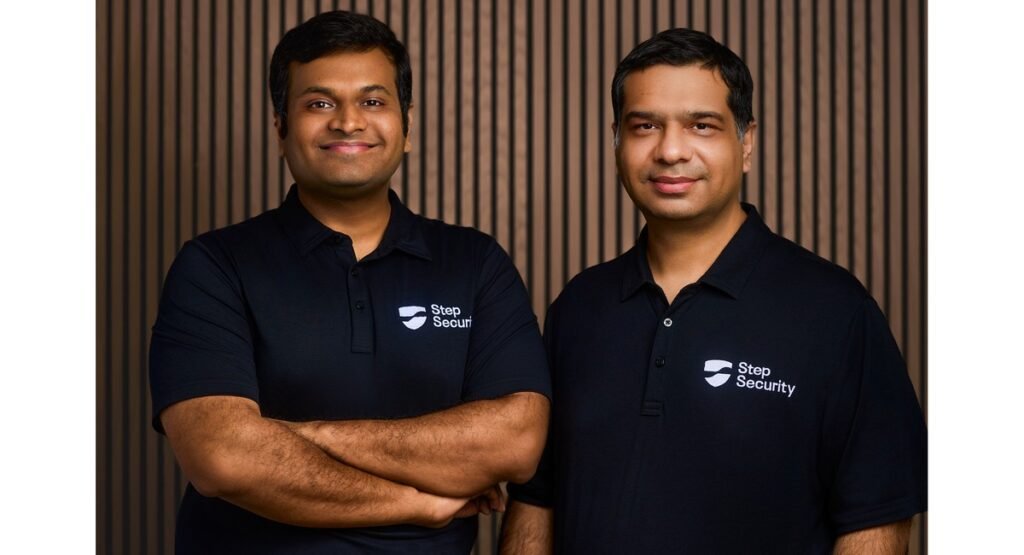
Varun Sharma and Ashish Kurmi founded StepSecurity in 2021 after working in incident response war rooms following the SolarWinds attack in December 2020. The two met at Microsoft in 2009.
Sharma went on to lead the Green Team inside Azure Security. Kurmi built Uber’s cloud security function and later led infrastructure security at Plaid.
“We founded StepSecurity in 2021 because we wanted security teams to have visibility and protection in the environments where software gets built.”
Varun Sharma, co-founder and CEO of StepSecurity
Where the money goes
StepSecurity will spend the Series A on product and engineering, security research and go-to-market expansion. Engineering work includes protection for agent sandboxes, an area customers have asked for as agents take on more coding work.
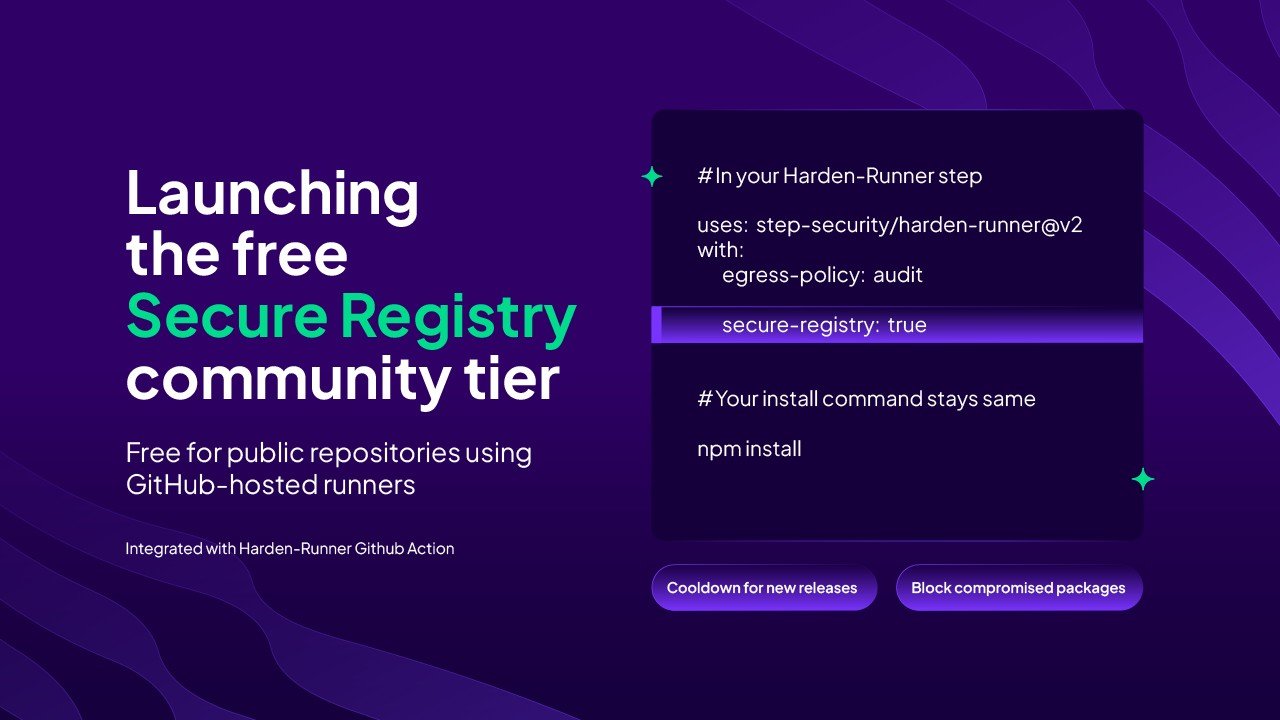
Alongside the round, the company launched a free Secure Registry community tier for public repositories using GitHub-hosted runners. Any public repository using Harden-Runner can now pull packages through Secure Registry and block compromised versions.
Enterprise customers named by the company include Circle, Dexcom, Kong, Mercor, Mercari, Chainguard and XBOW. The deal adds to a busy stretch for AI startup funding, with several rounds announced across the sector this week.