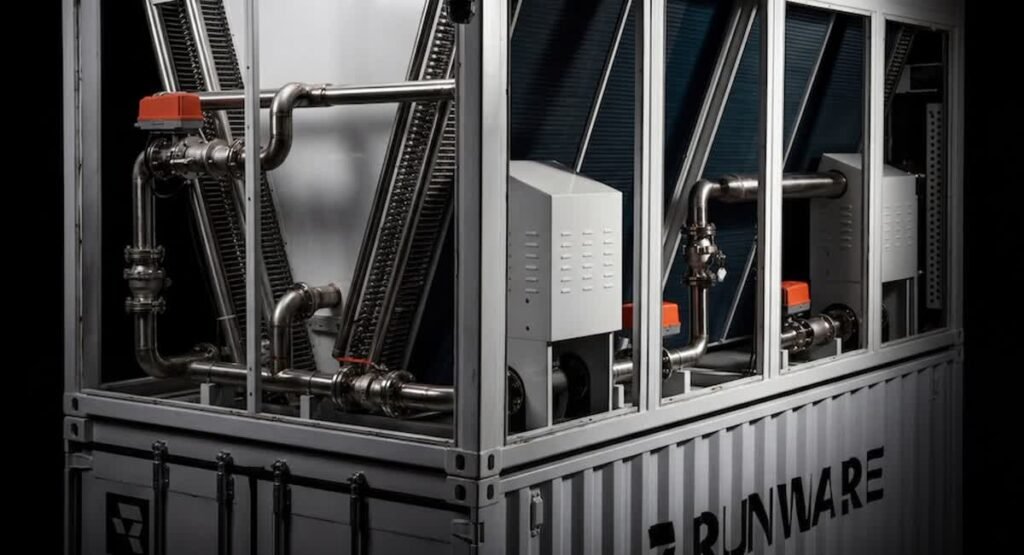
Runware wants to stop building data centers and start manufacturing them. The AI infrastructure company plans a factory in Romania where its Sonic Inference Pods will roll down a production line, much like cars on an assembly line.
A factory instead of a building site
Co-founder and chief executive Flaviu Radulescu said the company plans to scale its Romania factory to 30 megawatts of data center capacity per day by 2028. That pace works out at nearly one gigawatt per month.
Runware already has two factories. It has used one for a few years to build pods, while a second started construction earlier this year and should be finished within months and online early next year.
A pod once took three weeks to build, but the company expects that to fall to one day as production ramps up. Once installed, a pod should be online within 48 hours, a figure that covers installation and setup rather than the build itself.
What sits inside a pod
Each Sonic Inference Pod packs about one megawatt of compute into a 20-foot shipping container, with room for up to 1,200 graphics processors. The pod arrives assembled and tested, and needs only ground, power and a network connection at its site.
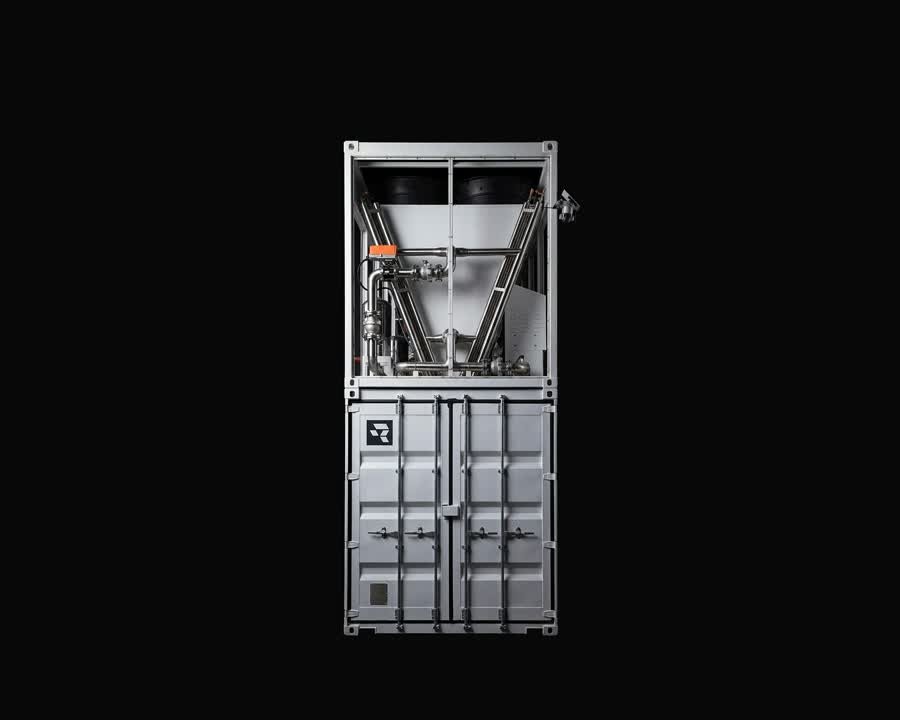
Cooling runs through a closed-loop liquid system with air-cooled radiators, so the pod needs no water connection. Runware says the pods run completely silent up to 86 degrees Fahrenheit and use renewable energy whenever possible.
Customers can provide their own site or ask Runware to find one. They can rent compute from Runware or supply their own graphics processors and pay a monthly fee for the pods and their operation, with power and internet charged separately.
Demand, funding and the hard part
Runware says it has received $1 billion in committed interest for Sonic pods since it began offering them to outside customers a month ago. That interest represents more than 20 megawatts of capacity that the company is now working to deliver.
Runware says it is working with power providers on a site pipeline covering 397 megawatts, with potential to expand to 1.2 gigawatts. The sites are typically smaller than those used by large cloud providers and often already have power in place.
The company has raised more than $60 million to date, including a $50 million Series A round last December. It plans to raise a Series B round, but for now it is finishing and launching the factory with the Series A funding.
“Customers should be able to plan a hyperscale data center around factory-built pods from the beginning and have it working in months instead of years,” said Radulescu.
Execution is the open question. A factory needs people, inventory and supply chain logistics, and prefabricated pods are also offered by companies such as Crusoe and Schneider Electric. Runware argues that designing its own systems and buying widely available parts will keep its costs low.
Higgsfield, which uses Runware infrastructure for its models, was named as a customer at the pod launch in August. If the factory plan works, the next test will be turning committed interest into delivered pods at scale.