Warp Sciences, launched by Kevin Weil, the former OpenAI executive who led the company’s AI-for-science work, will combine AI and robotics to automate the manual chemistry behind drug discovery. The startup has raised a $215 million Series A round led by Lightspeed Venture Partners at a post-money valuation of $865 million.
In his launch announcement, Weil said the funding will “bring frontier AI out of the browser and into the lab.”
What Warp Sciences will build
Warp Sciences will not develop drugs of its own. It is going after the slower stage that follows a promising find, when scientists make and test hundreds or thousands of variations of a molecule to improve its effect and cut side effects.
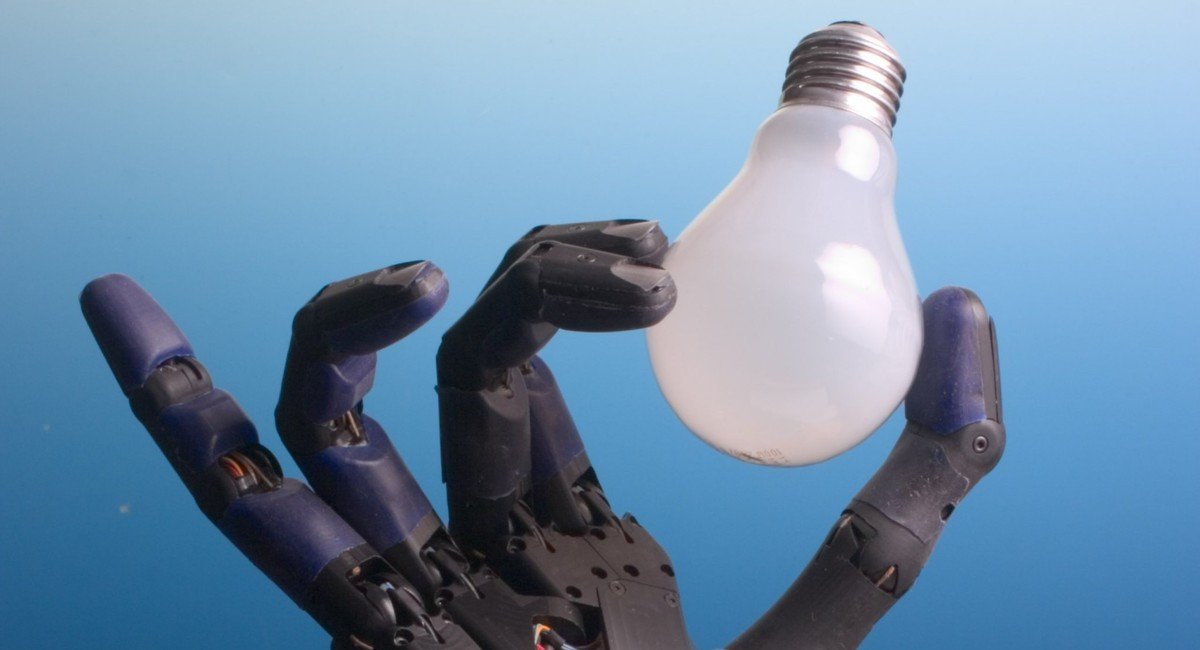
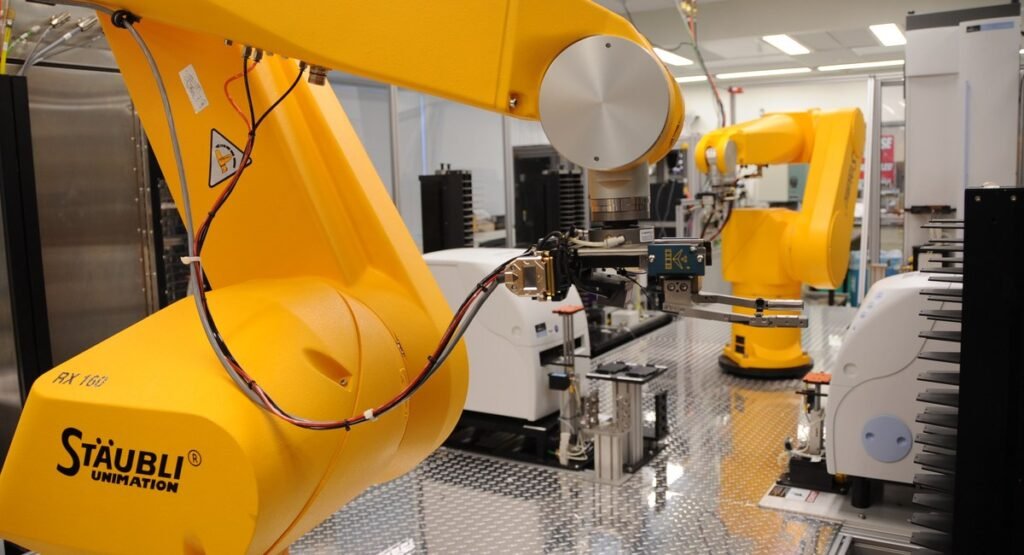
The startup is building a next-generation preclinical contract research organisation in the United States. Its labs will bring expert chemists, AI models and robotic arms together in facilities designed for automation from day one.
To train its models, Warp will record its own chemists at work. Wearable cameras and pressure-sensing gloves will capture how experiments are run, creating datasets the company will use to teach its AI systems real laboratory skills.
The company starts with a team of about 20 people and says it has already bought robotic arms and AI chips. It will work with experienced chemists on customer projects first, then automate more of their workflows as the tools prove themselves.
A bet on reshoring chemistry
For years, drugmakers have sent this laborious chemistry work to contractors in China, where firms such as WuXi AppTec competed on speed and cost. Warp wants to rebuild that capacity in the United States and insulate drug development from geopolitical supply-chain risks.
The timing reflects growing scrutiny of that reliance. In June, the US Department of Defense placed WuXi AppTec on a list of companies it linked to China’s military, though a judge blocked enforcement of the designation in August after the company challenged the decision.
“AI has dramatically accelerated software engineering and mathematics, but it has yet to make the same impact in the physical sciences. Chemistry and biology move forward when you make something, test it and learn from the result,” said Weil, co-founder and CEO of Warp Sciences.
A star-studded investor list
Alongside Lightspeed, the round drew IVP, Mayfield, Lux Capital, Premji Invest and Menlo Ventures. Lightspeed’s backing post called Warp a critical mission for US biotech and patients waiting on new medicines.
The angel list reads like a tech industry reunion. Backers include OpenAI CFO Sarah Friar, LinkedIn co-founder Reid Hoffman, Coinbase CEO Brian Armstrong, Figma co-founder Dylan Field, former Twitter CEO Parag Agrawal and Palantir CTO Shyam Sankar.
Warp was co-founded by Weil, DJ Patil, the White House’s first chief data scientist, Manohar Paluri, a former Meta vice president who co-founded Facebook AI Research, and Solomon Reisberg, a former Terremoto Biosciences executive.
Paluri, the company’s chief technology officer, said every experiment should make the next one smarter, with the software, AI and robotics built alongside the lab so each part reflects what chemists need.
AI giants step up in life sciences
The launch continues a busy stretch for AI in life sciences. Earlier this week, OpenAI acquired Orchestra Bio, a startup building AI agents for drug development. Anthropic introduced Claude for Life Sciences in June, while Google DeepMind spinoff Isomorphic Labs raised $2.1 billion in May.