
London is Europe’s biggest startup hub and one of the top three in the world, which means its founders are spoiled for choice and starved for signal at the same time.
Hundreds of newsletters, podcasts and publications compete for attention, but only a handful genuinely move the needle on fundraising, hiring and partnerships. The five platforms below are the ones that matter. They are where investors look for dealflow, where journalists hunt for stories and where founders go to be seen.
Each serves a different corner of the ecosystem, so the real trick is knowing which one fits your stage and your story.
At a glance
| Platform | Focus | Founded | Best for |
|---|---|---|---|
| The AI Landscape | AI startups: news, funding, success stories, tools | 2023 | AI founders and anyone tracking the AI economy |
| Sifted | European startup intelligence and data | 2019 | Investors and operators who decide with data |
| UKTN | UK tech news, analysis and events | 2017 | Founders who want national UK coverage |
| TechRound | Startup news and founder visibility | 2016 | Early-stage startups chasing the spotlight |
| Maddyness UK | Startup and innovation magazine | UK edition of French title | Founders who want a European audience |
Best Startup Media Platforms in London
1. The AI Landscape, the specialist for AI startups

The AI Landscape is the only platform on this list built exclusively around artificial intelligence startups. Founded in 2023 by Andrew Dennis, Himanshu Sharma and Nicole Catapano, it is headquartered in London with branches in the UAE and India, which gives it an unusual vantage point across three startup ecosystems at once.
Coverage spans the full life of an AI startup. There is daily startup news, a funding tracker that follows rounds as they happen, success stories from founders, and practical tools and resources for the community, including a startup directory, an AI timeline and an events section.
For AI founders, that combination matters. General tech press covers AI as one beat among many. Here it is the entire publication, which means deeper context and an audience that is already interested in what you are building.
Best for: AI founders who want coverage in the ecosystem’s specialist press, and anyone who needs to stay current on the AI economy without wading through general tech news.
2. Sifted, the one with the data
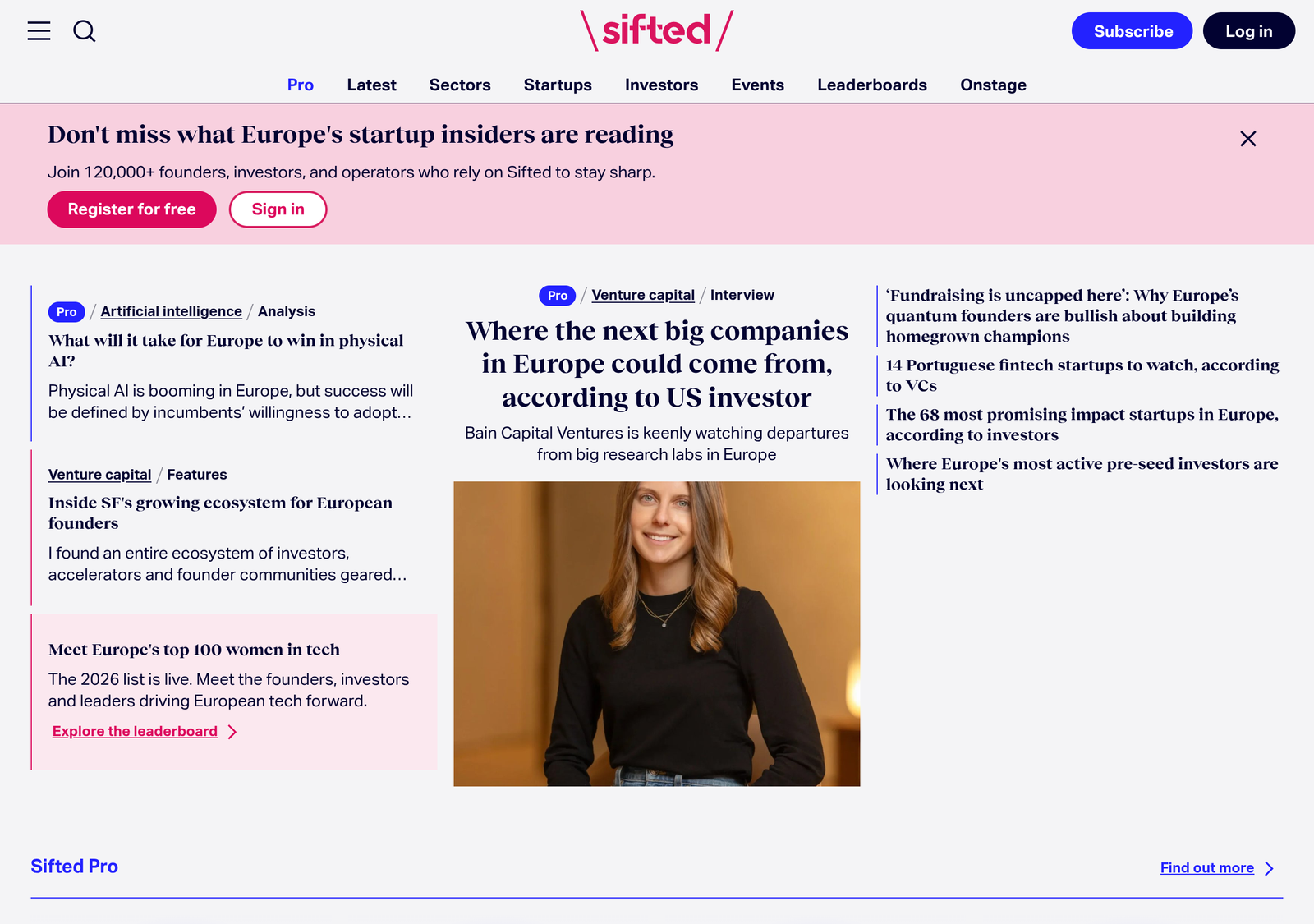
Sifted launched in 2019, founded by John Thornhill, the Financial Times’ former innovation editor, together with serial entrepreneur Caspar Woolley, and backed by the FT itself. It is headquartered in London with journalists across Europe, and it has grown from a newsletter into what it calls the intelligence layer for European tech.
That positioning is the point. Sifted pairs journalism with structured data through Sifted Pro, producing funding trackers, company and investor rankings such as the Sifted 250, sector maps and research reports.
Its reporters cover AI, fintech, climate tech, deeptech and the business of scaling, with the rigour you would expect from its FT lineage. If you are an investor mapping a sector or an operator benchmarking your growth, this is the publication that treats startups as an asset class to be analysed, not just stories to be told.
Best for: investors, analysts and scale-up operators who make decisions with data.
3. UKTN, the home of UK tech news
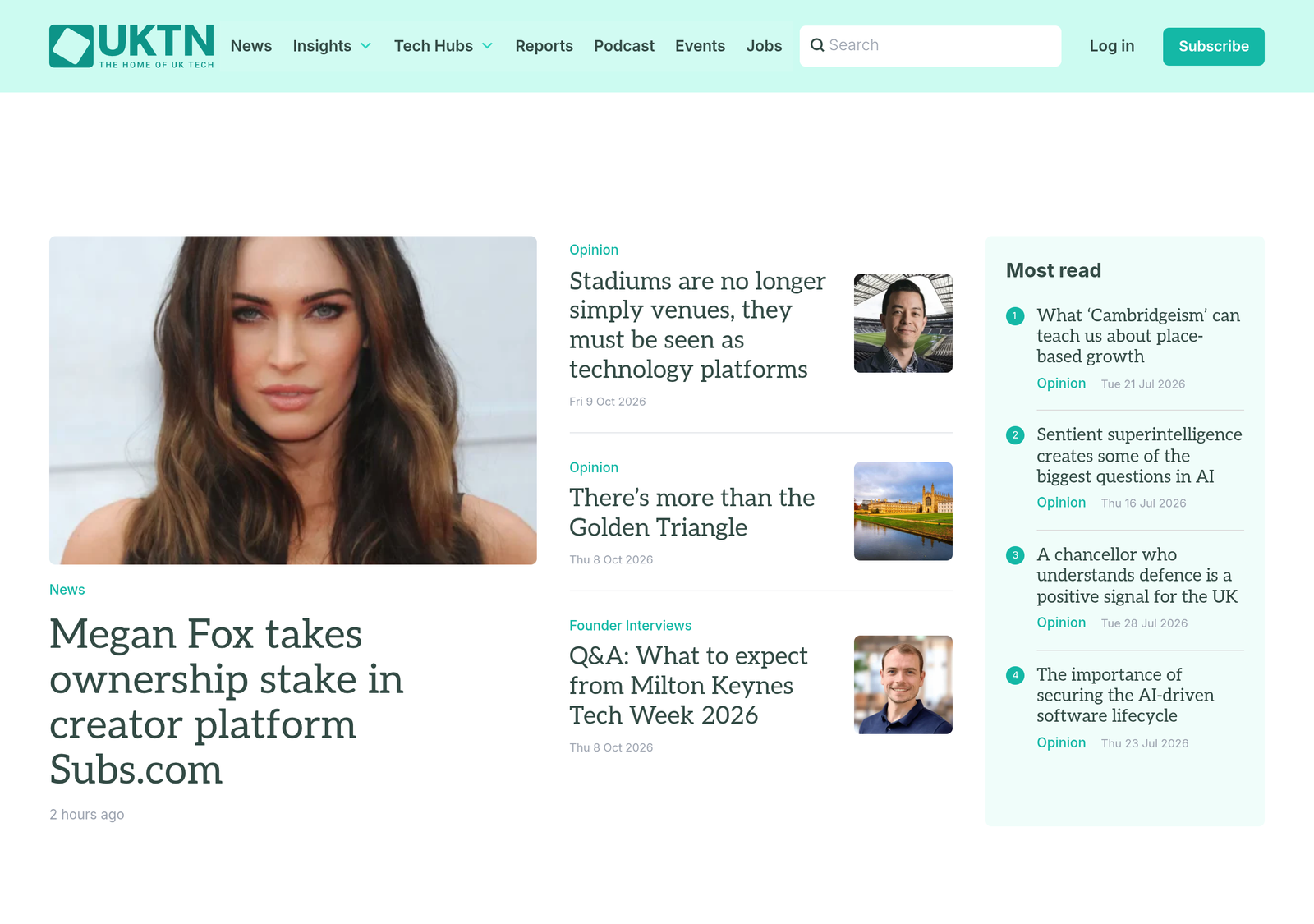
UKTN, formerly Tech City News, has covered British technology since 2017 from its base in Whitechapel, London. It describes itself as the home of UK tech, and the description fits. The publication combines breaking news with data-led industry analysis, founder interviews, profiles and coverage of tech hubs well beyond the capital.
What sets UKTN apart is how much of the ecosystem it touches in one place. Alongside news and analysis there are reports, a podcast, a jobs board and events that bring founders and corporates together. For a UK founder, it is the most direct route to national tech press coverage that actually understands the difference between Shoreditch and Sheffield.
Best for: UK founders and tech businesses that want national coverage and a window into regional ecosystems.
4. TechRound, the founder spotlight
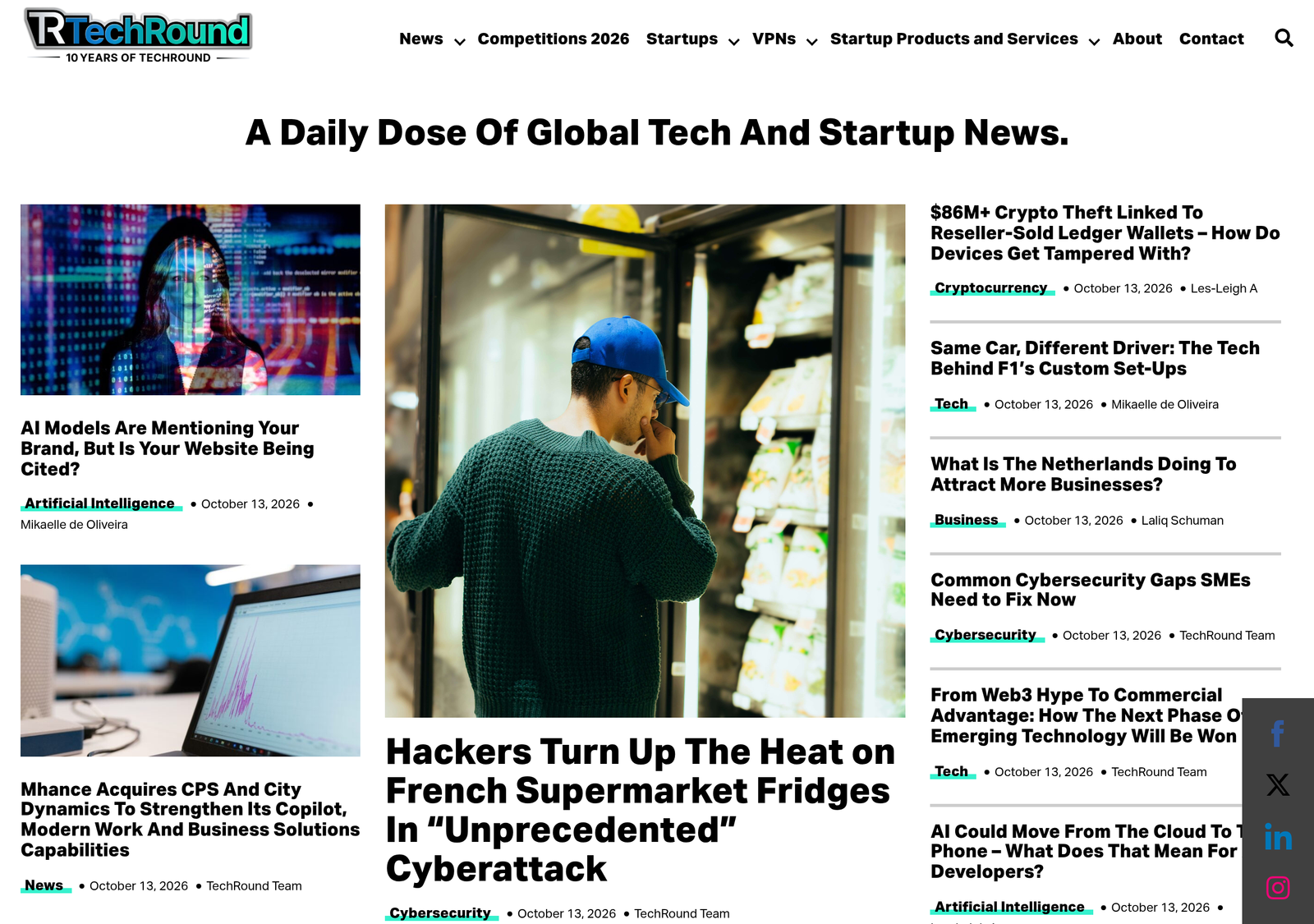
TechRound has been covering UK startups since 2016 and now reaches more than 300,000 monthly readers. Based in London, it publishes a daily dose of startup and tech news, but its real currency is founder visibility. Features like Startup of the Week give early-stage companies a proper showcase, while rankings such as 29 Under 29 and the SaaS66 have become genuine badges of honour in the UK scene.
The publication also runs competitions and awards throughout the year, which makes it unusually useful for young companies. Getting featured or shortlisted creates the kind of third-party credibility that helps with everything from hiring to fundraising conversations.
Best for: early-stage startups that need visibility and the credibility that comes with it.
5. Maddyness UK, the European bridge
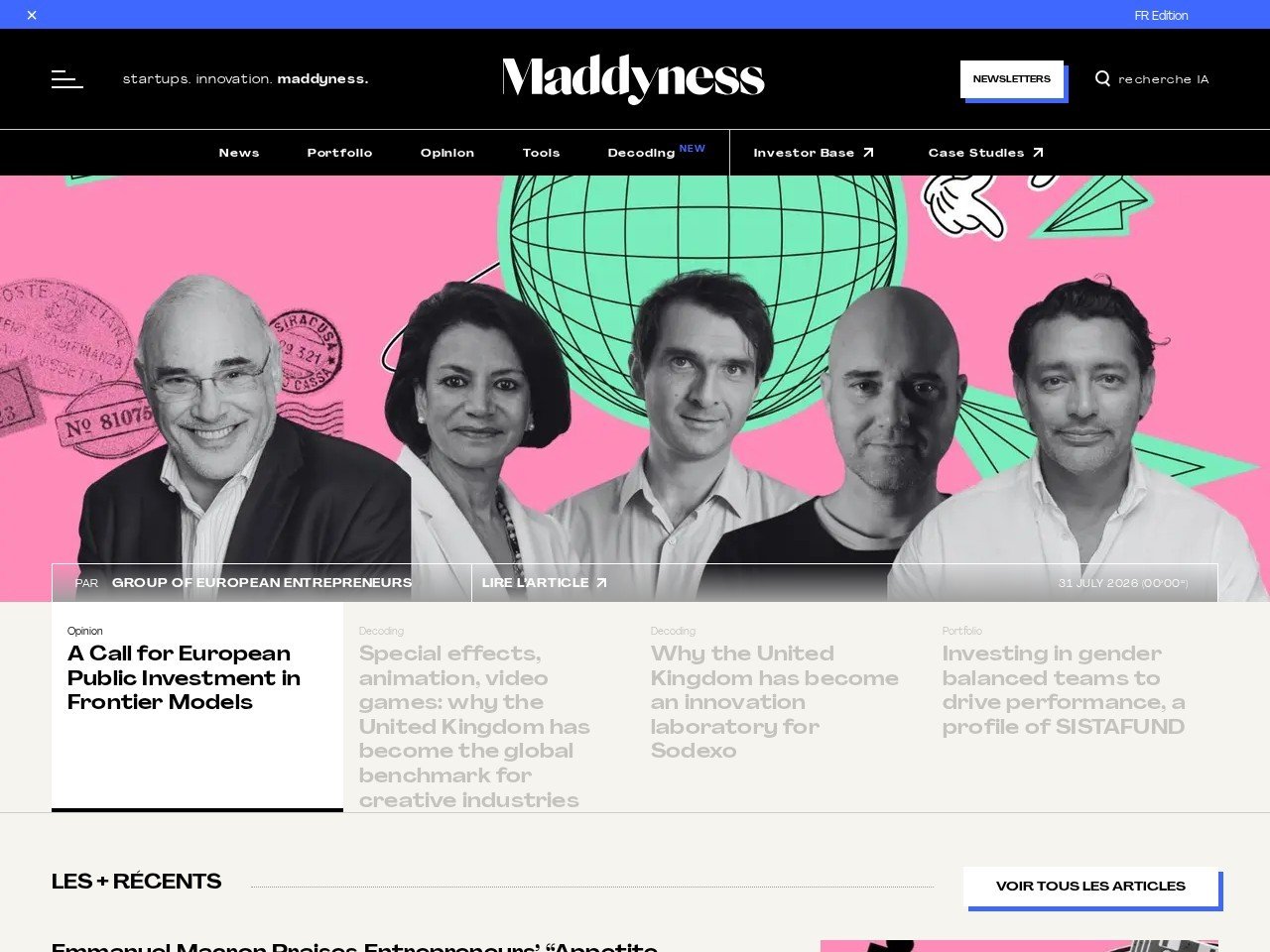
Maddyness began in France and has grown into a European magazine for startups, entrepreneurship and innovation, with a dedicated UK edition documenting the British ecosystem. Its style is closer to a magazine than a newswire, with news, opinion, investigations and practical guides sitting alongside each other.
The weekly MaddyMoney roundup is the feature to know. Every week it collects the UK startup ecosystem’s investment news into one briefing, which makes it a fast way to track who is raising and who is backing them. Maddyness is also a media partner of London Tech Week, which signals how embedded it is in the city’s flagship startup moments. For founders thinking beyond Britain, it is the natural bridge to a continental European audience.
Best for: founders and innovators who want their story to travel across Europe.
How to actually use this list
Reading these platforms keeps you informed, but the real value for founders is getting into them. Each one runs on pitches, and each wants something slightly different.
The AI Landscape wants AI stories with substance. Sifted wants data and scale. UKTN wants UK relevance. TechRound wants founder stories worth celebrating. Maddyness wants a European angle. Match your pitch to the publication and you stop being a press release in an inbox and start being a story they were already looking for.