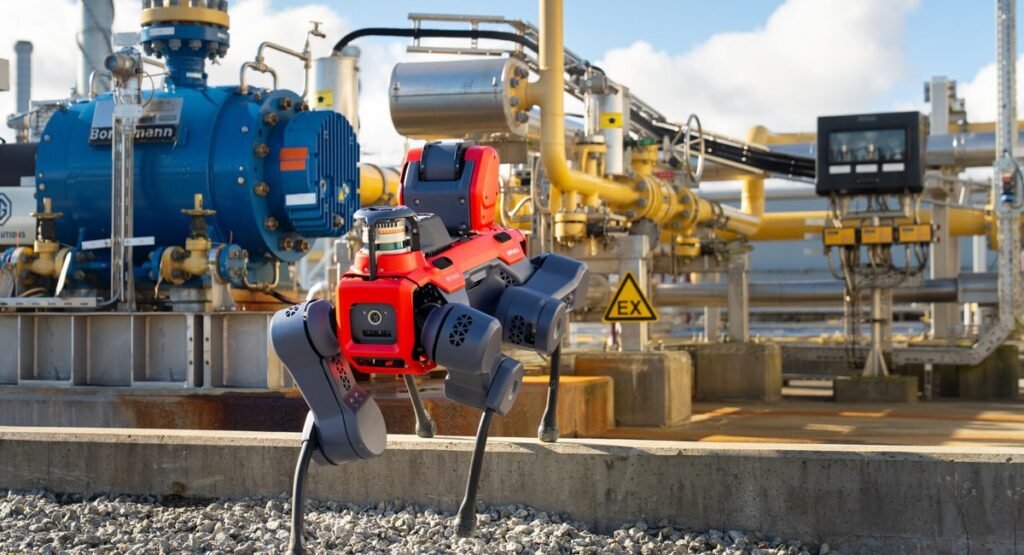
Zurich robotics company ANYbotics has started shipping ANYmal X, a four legged inspection robot built to work in explosive atmospheres. The company describes it as the first legged robot of its kind, and it is already heading to oil, gas and chemical customers including Equinor and DSM-Firmenich.
The robot automates routine inspection rounds in areas where standard robots are banned and people still walk in wearing protective equipment. It carries visual, thermal and acoustic sensors, plus an optional gas sensing module, and logs every reading against the asset it inspected.
Built for zones other robots cannot enter
Large parts of oil, gas and chemical plants are classified as hazardous zones because a single spark can ignite a flammable atmosphere. Pumps, compressors, valves and piping often sit in these zones, so inspection rounds there need entry permits, handheld gas detectors and protective gear.
ANYmal X is certified to operate in ATEX Zones 1 and 2, which cover areas where an explosive gas atmosphere is likely to occur during normal operation or occasionally. It is not certified for Zone 0, for explosive dust atmospheres, or for IIC gases such as hydrogen and acetylene.
ANYbotics values the global oil, gas and chemical inspection market at $102 billion and calls it the largest market for autonomous inspection. The company says undetected equipment failures cost the 500 largest companies roughly $1.4 trillion each year in preventable downtime.
Four years of explosion proof engineering
The robot took four years to develop and is covered by more than ten patents, according to the company. Since 2023, BP, Equinor, Shell, PETRONAS, Petrobras, BASF and SLB have tested it across hundreds of onshore and offshore missions through an early access programme.
Many experts thought a legged robot could never be made safe for explosive atmospheres. Oil, gas and chemical plants are among the most hazardous and most costly places to operate.
The quote comes from Péter Fankhauser, co-founder and chief executive of ANYbotics. His team had to solve a problem fixed equipment never faces, since a walking robot needs powerful motors, a large battery and exposed cameras while staying light enough to climb stairs.
The answer, in part, is nitrogen filled sealed chambers for the AI computer and inspection equipment, flameproof casings for all twelve leg actuators and the battery, and conductive feet that ground the robot. Charging and data links pass through energy barriers, and charging itself happens outside the hazardous area.
A complete inspection system, not just a robot
ANYmal X runs on Shift, ANYbotics operations platform for autonomous industrial inspection. Shift schedules missions, organises findings by asset and connects with plant systems including SAP, Yokogawa and SLB, so inspection results can flow straight into maintenance work orders.
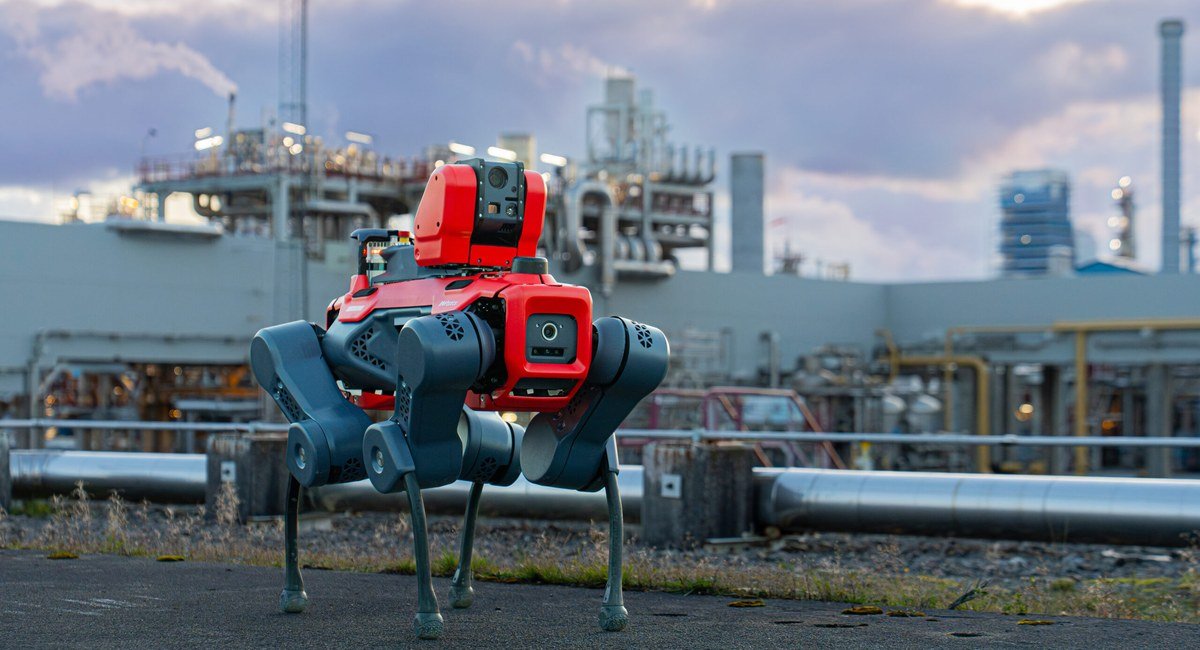
More than 50 power, metals and materials customers already use the system to run over 120,000 autonomous inspections every month, the company says. Preliminary specifications include over three hours of battery runtime per charge, 45 degree stair climbing and operation from minus 10 to 50 degrees Celsius.
ANYmal X and its full industrial AI stack will be shown publicly for the first time at ADIPEC 2026 in Abu Dhabi, alongside SLB and Kuwait Oil Company. More detail on the robot is available on the official ANYmal X product page.