Tesla has started rolling out Full Self-Driving v15, the biggest overhaul of its driver assistance software in years. The update adds a photorealistic view of the road on the center screen and claims a 25-fold improvement in how the system handles safety-critical cases.
What Reality View shows
Tesla announced the rollout on X on 21 November. The first cars are getting FSD (Supervised) v15.0.1, and the first builds are going to early access customers. Chief executive Elon Musk said the wide release will come in December as part of the 2026 Holiday Update.
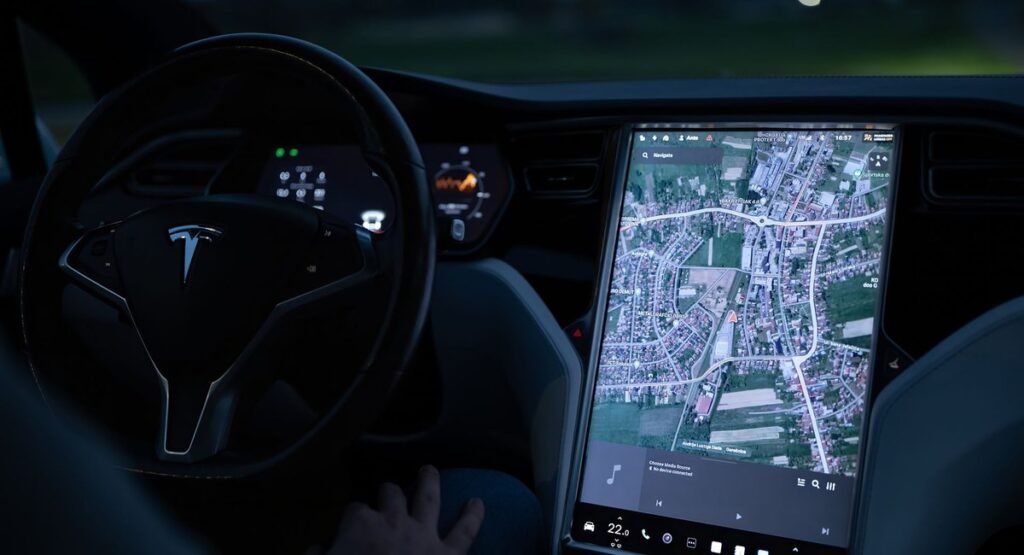
Reality View replaces the old driving display. Instead of simple outlines of cars and lanes, the screen shows a detailed moving picture of the street around the car, seen from a virtual camera above and behind it. Tesla calls the same feature Tesla Augmented Reality in the release notes.
The view is generated live by the same end-to-end network that drives the car. Musk described it as real-time AI video generation with no game engine involved. Drivers can watch it full screen, split it with the map, or keep the map on its own.
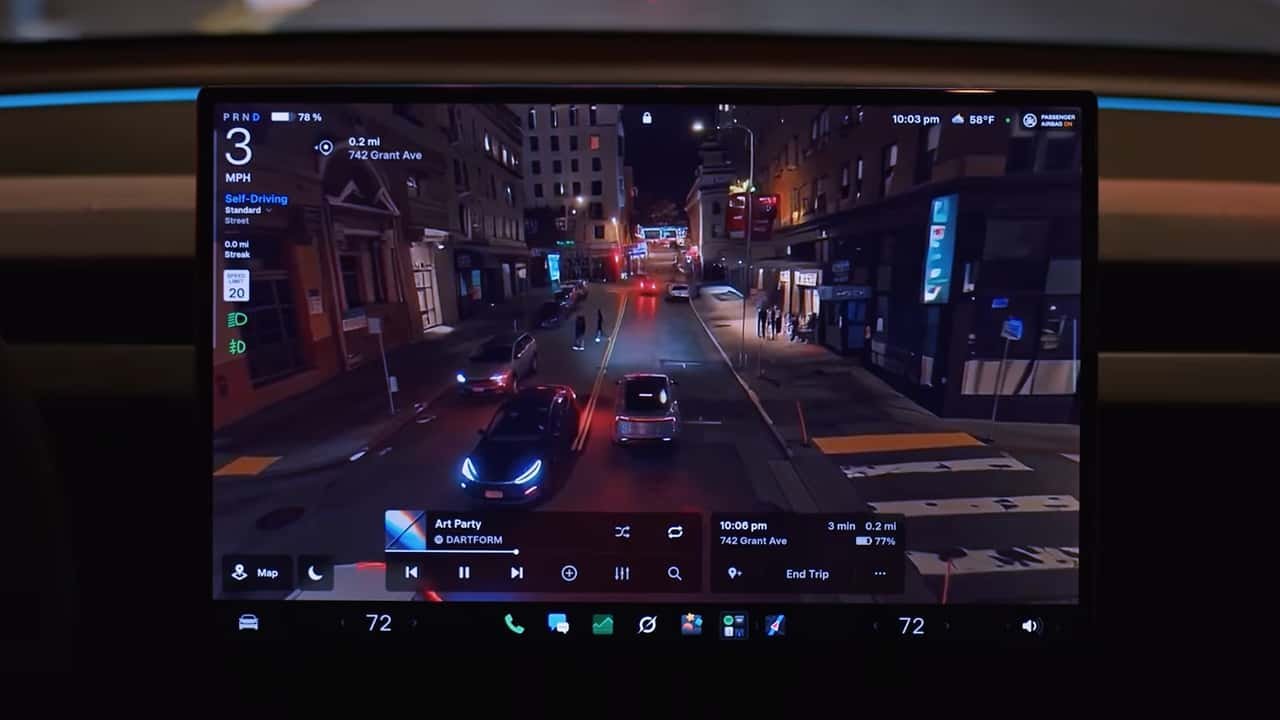
“Real-time AI video generation, no gaming engine.”
Elon Musk, chief executive of Tesla
What v15 changes under the surface
The headline claim is a 25-fold improvement in the critical intervention rate. Tesla credits a new vision encoder that is shared between FSD, its Robotaxi service and its Optimus humanoid robot, and trained on millions of internet videos. Tesla has not shared the underlying number, only the multiplier.
Navigation now learns from the routes other Teslas actually take. The learning covers the start and end of trips for now, and Tesla says later v15 releases will extend it to the whole route. Parking picks also draw on the driver’s own history, and the map shows several parking options at the destination.
The release notes list better detection of road signs, small animals, road debris and chains, plus better detection of potholes and road details and avoidance of deep standing water. Speed handling is tuned for each driver profile, school zones and speed limits, and bad weather.
FSD can now slow for speed cameras, and a new Bike Rack Mode lets it keep working with a rack or similar accessory on the tow hitch. Driver monitoring works better with hats and sunglasses, and is less strict for drivers on higher-speed profiles.
What to watch next
The rollout is limited to early access cars for now. The wide release in December will show whether the driving improvements hold up across the fleet, and whether the 25-fold claim survives contact with real roads.
The 25-fold figure is Tesla’s own, with no baseline published. Independent data from early drivers will be the first real check on it, and the version history of FSD gives reason to wait for that data before judging the update.