
A week of United Nations talks on lethal autonomous weapons ended in Geneva on Saturday 21 November with no binding rules and no ban. The 128 countries at the table agreed only to keep working on a possible accord and to aim for a finished draft by 2028.
What the talks agreed
Delegates at the seventh review conference of the Convention on Certain Conventional Weapons agreed to start drafting an international instrument on lethal autonomous weapons systems. The work is expected to take two years, and whether the final text will be legally binding was left open.
The conference president, Julien Thoni, called the result a significant achievement for humanitarian disarmament after more than ten years of talks. Izumi Nakamitsu, the UN high representative for disarmament affairs, hailed the same outcome while describing it as “a glass half full or half empty”.
Who blocked binding rules
About 100 countries backed legally binding rules on a short timeline. The United States, Russia and Israel opposed that push, and the final text was watered down. Decisions under the convention need consensus, so a single country can block an agreement.
Seven countries had proposed opening formal negotiations on a rulebook that could limit machines killing without human control. Brazil, Austria, Belgium, Ireland, Mexico, New Zealand and Panama put the proposal forward, and that effort fell short.
Frederico Meyer, the ambassador of Brazil, said, “Technology is moving faster than diplomacy.” He added, “Diplomats are very slow,” a complaint that summed up the week for many in the room.
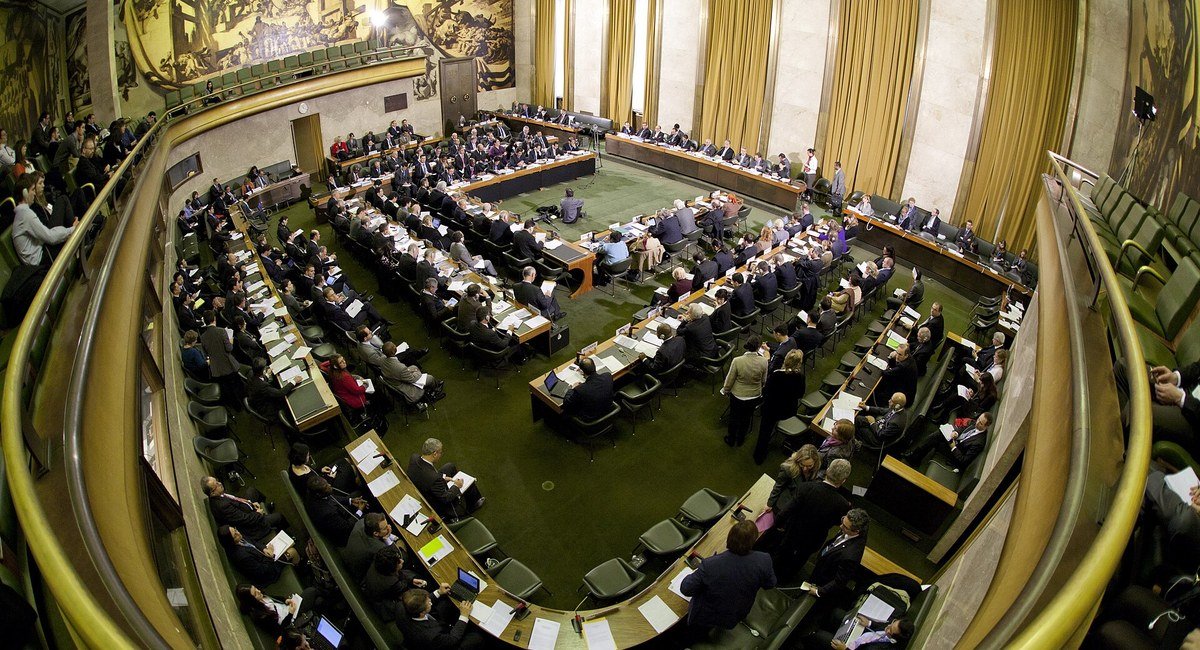
Fourteen years of talks
The campaign group Stop Killer Robots called the outcome a watered down mandate. Beatrice Fihn, founder of the advocacy group Lex International, said the decision amounts to “pushing the can down the road for two more years”.
“States have agreed it is sufficient to just talk about the issue, for the 14th year, while these weapons enable atrocities.”
Max Tegmark, machine learning specialist at the Massachusetts Institute of Technology and founder of the Future of Life Institute
The talks opened on Monday and ran past 4 a.m. on Saturday in Geneva before the final text was settled. Russia had blocked the agenda at the start of the week in a dispute over speaking rights for observers, which forced much of the meeting into informal sessions.
UN Secretary General Antonio Guterres had set a 2026 deadline for launching negotiations toward an agreement, and he leaves office at the end of the year. Before the talks, he urged delegates to “take action to prevent the use and spread of these merciless weapons”.
What happens next
Activists say armed drones that can strike targets on their own have already been deployed in some select instances in conflict zones. A widespread rollout has not happened yet, and campaigners say the delay leaves civilians exposed while the technology advances.
Volker Turk, the UN human rights chief, has said, “A machine must never have the power to decide whether a human being survives or dies.” He has called for bans on autonomous weapons that target people and on weapons whose effects cannot be fully understood or controlled.
The work now continues under the same convention for two more years. The target is a possible accord by 2028, with no agreement yet on whether it will bind countries or stay voluntary.